Finding affordable custom shirts is not only about choosing the lowest quoted price. The printing method can affect the final cost, colour quality, durability, fabric compatibility, and even how comfortable the shirt feels after printing. If you are looking for Cheap T Shirt Printing Singapore, choosing the right technique can help you avoid paying for features you do not actually need.
Screen printing, heat transfer, direct-to-garment (DTG), sublimation, and embroidery each work differently. A method that makes sense for 100 company shirts may not be the best option for 10 event shirts.
This guide compares the most practical options for Custom Shirts Printing in Singapore and explains which method works best for different budgets, designs, quantities, and shirt types.
What Makes T-Shirt Printing Affordable?
Before comparing printing methods, it helps to understand what actually determines the cost of a custom shirt.
The printing price is usually influenced by:
- Number of shirts ordered
- Printing method
- Number of colours in the artwork
- Size and placement of the design
- Type and colour of the shirt
- Fabric composition
- Number of print locations
- Artwork preparation
- Order turnaround time
- Special finishing requirements
For example, printing the same simple one-colour logo on 100 shirts can be considerably more cost-effective per piece than printing different full-colour designs on 10 individual shirts.
That is why the cheapest method depends on the project rather than the printing technology alone.
Which T-Shirt Printing Method Is Cheapest?
For larger orders with simple designs, screen printing is often one of the most economical options. It works particularly well when many shirts carry the same design.
For smaller orders or designs containing several colours, heat transfer or DTG can make more sense because they require less setup for each design.
Sublimation is particularly useful for polyester garments such as sportswear, while embroidery is better suited to professional polo shirts when a premium stitched appearance is more important than achieving the lowest possible cost.
Here is a quick comparison:
| Printing Method | Best For | Design Type | Quantity | Cost Advantage |
|---|---|---|---|---|
| Screen Printing | Bulk orders | Simple designs, limited colours | Medium to large | Excellent for bulk |
| Heat Transfer | Small orders | Multi-colour designs | Small to medium | Good for short runs |
| DTG | Detailed artwork | Photos and complex graphics | Small to medium | Good for personalised orders |
| Sublimation | Polyester shirts | Bright, full-colour designs | Small to large | Efficient for suitable fabrics |
| Embroidery | Corporate polos | Logos and text | Small to medium | Premium rather than lowest cost |
The important point is simple: the best affordable option is the method that matches your order requirements.
1. Screen Printing: Best for Affordable Bulk Orders
Screen printing is one of the most established methods for custom apparel. Ink is pushed through a prepared screen onto the shirt, with separate screens generally used for different colours.
It is particularly useful when you need a large number of shirts featuring the same logo, slogan, or artwork.
Why Screen Printing Can Reduce Costs
The setup involved in screen printing becomes more worthwhile as the order quantity increases. Once the screens are prepared, the same design can be reproduced efficiently across many garments.
This makes it a strong choice for:
- Company uniforms
- School events
- Sports teams
- Charity events
- Promotional campaigns
- Staff activities
- Large group gatherings
A simple two-colour company logo printed on 100 shirts is a typical situation where screen printing can offer good value.
When Should You Avoid Screen Printing?
Screen printing may not be the most practical choice when you only need a few shirts or when every shirt requires a different design.
It can also be less suitable for highly detailed photographic artwork with many colour transitions.
Best choice: Large orders with a consistent design and relatively simple artwork.
2. Heat Transfer: Flexible for Small Custom Orders
Heat transfer printing uses a printed or cut design that is transferred onto the shirt using heat and pressure.
This method is useful when you need flexibility without committing to a large quantity.
It can work well for:
- Small business teams
- Birthday groups
- Family events
- Short-term promotions
- Small corporate orders
- Personalised shirts
- Designs containing several colours
One major advantage is that you can create detailed artwork without requiring the same setup approach as traditional screen printing.
Is Heat Transfer Good for Cheap Custom Shirts?
It can be, particularly for smaller orders.
Suppose a company needs 12 shirts for an upcoming event. Ordering a large quantity simply to achieve a lower screen-printing unit cost may not make financial sense. Heat transfer can be a practical alternative because the order is small.
However, always ask about the transfer material, expected durability, washing instructions, and print finish before placing an order.
Best choice: Small-to-medium orders where flexibility and design variety matter.
3. DTG Printing: Good for Detailed and Personalised Designs
Direct-to-garment printing, commonly called DTG, prints specialised textile ink directly onto the garment.
Unlike traditional screen printing, DTG can reproduce detailed artwork, gradients, and multiple colours without requiring each colour to be separated into a different screen.
That makes it useful for:
- Illustrations
- Photographic artwork
- Complex graphics
- Full-colour designs
- Individual personalised shirts
- Small batches
If you have a design with many colours and only need a small number of shirts, DTG may be more practical than screen printing.
What Is the Trade-Off?
DTG is not automatically the cheapest choice for every order. For a large quantity of identical shirts, another method may provide a better unit cost.
The fabric also matters. Cotton and cotton-rich garments are commonly associated with DTG applications, while other printing methods may be more appropriate for synthetic sportswear.
Best choice: Detailed designs, personalised shirts, and smaller quantities.
4. Sublimation: A Smart Choice for Polyester Sportswear
Sublimation is different from many other printing methods because the dye becomes part of the polyester fabric rather than sitting as a traditional layer on top.
It is especially suitable for polyester garments and is commonly used for sports and activewear.
This makes sublimation a strong option for:
- Team jerseys
- Sports events
- Fitness groups
- Running clubs
- Outdoor activities
- Custom sportswear
- Full-colour polyester designs
If you are considering Dri Fit Polo T Shirts or other polyester-based garments, ask the printer which method is compatible with the exact fabric and shirt colour.
Sublimation is particularly attractive when the design needs vivid colours and extensive coverage.
Is Sublimation Suitable for Every T-Shirt?
No. Fabric composition is critical.
A method designed for polyester should not automatically be selected for cotton simply because the design looks attractive on a sample image.
Always confirm:
- The shirt material
- Shirt colour
- Printing area
- Design coverage
- Expected washing and usage conditions
Best choice: Polyester sportswear and vibrant full-colour designs.
5. Embroidery: Professional, But Not Always the Cheapest
Embroidery is technically different from printing because the design is stitched into the garment.
It gives corporate apparel a structured and professional appearance, which makes it popular for polos, uniforms, and staff clothing.
Embroidery works particularly well for:
- Company logos
- Staff uniforms
- Polo shirts
- Hospitality teams
- Corporate events
- Premium branded apparel
However, embroidery may cost more than basic printing, particularly when the logo is large or contains a high number of stitches.
For that reason, it should not automatically be selected when your main objective is Cheap T Shirt Printing Singapore.
Best choice: Professional corporate clothing where appearance and long-term branding are priorities.
Screen Printing vs Heat Transfer vs DTG
If you are still unsure which method to choose, this comparison can help:
| Factor | Screen Printing | Heat Transfer | DTG |
|---|---|---|---|
| Small quantities | Less suitable | Very suitable | Suitable |
| Bulk orders | Excellent | Suitable | Suitable |
| Simple logos | Excellent | Good | Good |
| Detailed artwork | Moderate | Good | Excellent |
| Multiple colours | Good, with setup | Excellent | Excellent |
| Identical designs | Excellent | Good | Good |
| Personalised designs | Less convenient | Excellent | Excellent |
| Best use | Bulk apparel | Flexible small orders | Detailed artwork |
There is no universal winner. The right choice depends on what you are printing.
How to Choose the Right Method for Your Budget
Instead of asking a printer, “Which method is cheapest?”, give them enough information to recommend the right process.
Step 1: Decide Your Quantity
Quantity is one of the biggest factors.
- 1–10 shirts: Consider heat transfer or DTG.
- 10–50 shirts: Compare heat transfer, DTG, and screen printing.
- 50+ identical shirts: Screen printing becomes increasingly worth considering.
- Sportswear orders: Check sublimation and fabric compatibility.
These are practical starting points rather than fixed pricing rules.
Step 2: Check Your Fabric
Do not select a printing technique before choosing the garment.
Cotton, polyester, blended fabrics, and specialty materials can respond differently to printing and heat.
For example, a cotton round-neck shirt may require a different approach from a polyester sports shirt.
Step 3: Look at the Artwork
Ask yourself:
- Does the design contain one or two colours?
- Is it a photograph?
- Does it contain gradients?
- Does every shirt need a different name?
- Is the design small or full-front?
- Do you need printing on the front and back?
A simple company logo is much easier to reproduce economically than a large photographic design with many colour transitions.
Step 4: Think About How the Shirts Will Be Used
A shirt for a one-day event has different requirements from a uniform that employees will wear every week.
For regular-use corporate clothing, consider durability, washing frequency, fabric quality, and print feel instead of focusing only on the initial price.
Corporate Shirt Printing: When Appearance Matters
Businesses often need shirts that look consistent and professional.
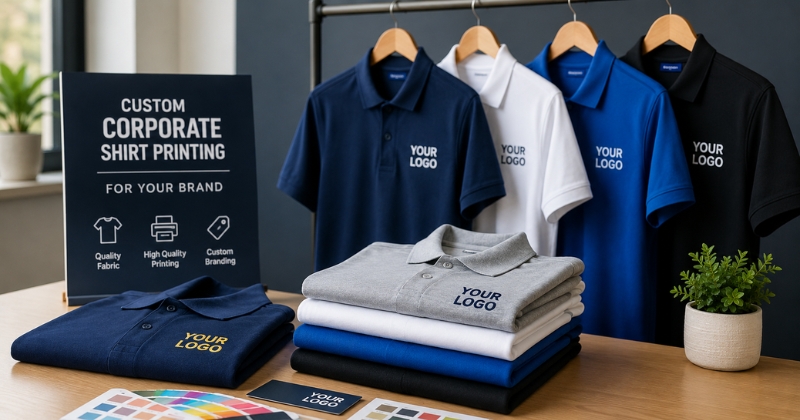
Corporate Shirt Printing can be used for employee uniforms, exhibitions, trade shows, company outings, promotional campaigns, and internal events.
For corporate apparel, consider:
- Logo placement
- Brand colours
- Shirt colour
- Staff comfort
- Size availability
- Printing durability
- Consistency across the full order
A simple logo on the chest may be enough for everyday uniforms. A larger back print can work better for event visibility.
For senior staff or customer-facing teams, embroidered polos may create a more formal appearance, while printed T-shirts can be more appropriate for casual events.
Why Dri-Fit Shirts Can Be Useful for Teams and Events
Singapore’s warm and humid climate makes garment comfort an important consideration for outdoor activities.
Dri Fit Polo T Shirts and other moisture-friendly polyester garments can be practical for sports teams, company outings, promotional events, and active staff.
But the garment and printing method should be considered together.
Before placing an order, check whether:
- The fabric is suitable for your chosen printing process.
- The design will remain clear on the selected colour.
- The shirt is comfortable for the intended activity.
- The sizes cover everyone in the group.
- The printer can reproduce your logo consistently.
Choosing the right garment first can prevent expensive reprints later.
Common Mistakes That Make Custom Shirts More Expensive
Trying to save money can sometimes increase the total cost.
Avoid these common mistakes:
Ordering the Wrong Quantity
Ordering far more shirts than you need just to reduce the unit price can create unnecessary inventory.
Choosing a Method Before Choosing the Fabric
The printing technique should work with the garment, not the other way around.
Using Low-Resolution Artwork
Poor artwork can require additional preparation or produce an unsatisfactory final print.
Ignoring Print Placement
A large front-and-back design can cost more than a small chest logo. Confirm exactly what is included in the quotation.
Comparing Only the Shirt Price
A cheap quotation may exclude artwork preparation, additional print locations, special sizes, delivery, or other charges.
Not Asking About Washing and Care
A printed shirt needs appropriate care. Ask the printer for washing instructions, particularly when the shirts will be used regularly.
A Simple Checklist Before Ordering Custom Shirts
Before confirming your order, check these seven points:
- Quantity: How many shirts do you actually need?
- Fabric: Cotton, polyester, or another material?
- Design: Simple logo or detailed artwork?
- Colours: How many colours are required?
- Placement: Front, back, sleeve, or multiple locations?
- Usage: One-time event or regular wear?
- Deadline: When do the finished shirts need to be ready?
Once these details are clear, it becomes much easier for a printing provider to recommend a suitable method and provide an accurate quotation.
Custom Shirts Can Be Part of a Larger Branding Strategy
T-shirts are not the only option when you are planning promotional merchandise.
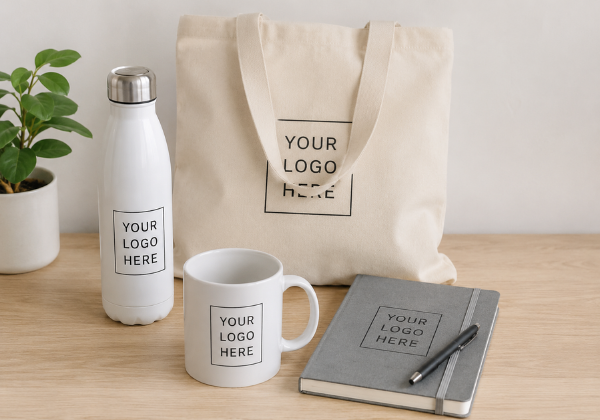
Businesses can combine apparel with Corporate Gift Ideas such as mugs, bags, bottles, badges, or other branded items.
For example, a company attending an exhibition could create a simple package containing:
- Branded T-shirt
- Custom tote bag
- Printed mug
- Logo sticker
- Branded stationery
You can also consider Custom Product Labels when products need branded packaging or identification.
For larger marketing campaigns, combining shirts with Custom Printed Corporate Gifts can create a more consistent brand experience across different customer touchpoints.
Why the Cheapest Printing Method Is Not Always the Cheapest Overall
A low per-shirt price does not necessarily mean the lowest total cost.
Imagine ordering 100 shirts with a printing method that is inexpensive but unsuitable for the fabric. If the print quality is poor and 20 shirts need to be replaced, the apparent saving quickly disappears.
A better approach is to consider value per usable shirt.
Look at:
- Garment quality
- Printing quality
- Durability
- Quantity
- Design requirements
- Turnaround time
- Customer support
- Reprint or replacement policies
This approach is especially important for corporate orders, where inconsistent branding can affect the overall appearance of a team.
How JoSa Imaging Can Help With Affordable Custom Shirts
When comparing Cheap T Shirt Printing Singapore options, it helps to work with a printing provider that can recommend the right method based on your quantity, fabric, design, and budget.
JoSa Imaging is an example of a Singapore printing company offering custom apparel and other personalised printing solutions. Depending on your requirements, you can discuss options such as screen printing, heat transfer, sublimation, DTG, or embroidery.
For example, a business ordering 100 shirts with a simple company logo may want to compare screen printing, while a smaller team ordering personalised shirts with different names may benefit from a more flexible printing method.
JoSa Imaging can also be considered when your project involves more than apparel. Businesses planning promotional campaigns can explore Corporate Gift Ideas, custom merchandise, Custom Product Labels, and Custom Printed Corporate Gifts to maintain consistent branding across different products.
Before placing an order, share the following details with the printing provider:
- Number of shirts required
- Shirt type and fabric
- Design or logo
- Preferred print locations
- Required delivery date
- Intended use
- Approximate budget
Providing these details allows the printer to suggest a suitable combination of garment and printing method instead of simply choosing the lowest-priced option.
Final Thoughts
So, which printing method should you choose?
For large quantities with the same simple design, screen printing is usually the first method worth comparing for affordability.
For small orders and flexible multi-colour designs, heat transfer can be a practical option.
For detailed or personalised artwork, DTG can provide greater design flexibility.
For polyester sportswear and vibrant full-coverage designs, sublimation is worth considering.
For professional corporate polos, embroidery can provide a polished finish, although it may not be the lowest-cost option.
The key is to match the method to your quantity, fabric, artwork, and intended use. When comparing custom printing providers in Singapore, request a quotation based on the complete project rather than just the printing cost per shirt.
If you are planning a team order, corporate event, promotional campaign, or personalised apparel project, explore JoSa Imaging’s custom T-shirt printing options and discuss your requirements with its team to find a suitable combination of garment, printing method, and budget.
Frequently Asked Questions
1. What is the cheapest T-shirt printing method for bulk orders?
Screen printing is often a cost-effective choice for bulk orders when the same design is printed across many shirts, particularly when the artwork uses a limited number of colours.
2. What is the best printing method for a small number of shirts?
Heat transfer and DTG are commonly worth considering for smaller orders. They provide greater flexibility without relying on the economies of scale associated with large screen-printing runs.
3. Is screen printing better than heat transfer?
Neither is universally better. Screen printing is generally more attractive for larger quantities of the same design, while heat transfer can be more convenient for smaller or more varied orders.
4. Which printing method is suitable for Dri-Fit shirts?
The answer depends on the exact polyester fabric, shirt colour, and design. Sublimation can be particularly suitable for polyester sportswear, while other methods may also be appropriate depending on the garment.
5. How can I reduce the cost of custom shirt printing?
Start by ordering the quantity you genuinely need, use artwork suited to the selected method, avoid unnecessary print locations, choose an appropriate garment, and compare complete quotations rather than only the printing price.